Issue of the Week: Human Rights, War
Published November 21, 2025
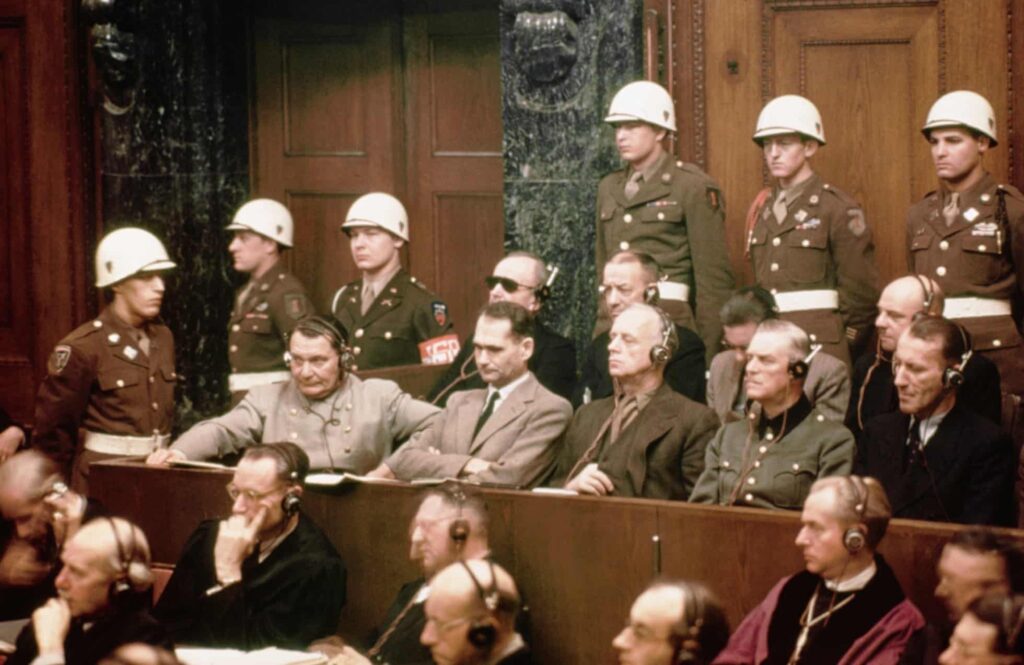
Nuremberg trial records made available online after painstaking 25-year project, The Guardian, 20 Nov. 2025
Yesterday, six US military and national security veterans of the US–Senators Mark Kelly and Elissa Slotkin, and Representatives Chris Deluzio, Maggie Goodlander, Jason Crow and Chrissy Houlahan–who had played important roles in US defense and are now members of Congress, released a video to members of the US Military reminding they “must refuse illegal orders.”
The response from the president, who did not serve in Vietnam and did not apply for conscientious objection, but did not serve in the military when the draft was still in place because of a deferment for bone spurs, two years after he had been “declared available for service and passed a physical exam” (Business Insider), was that the members of congress, who had served honorably in the military or intelligence services and are currently serving in key roles in these areas in congress, had in effect committed treason and should be executed.
The response from the White House and supporters of this line always refered to “orders” and never referred to “illegal orders,” which is the law and what was actually said.
Many momentous things have occurred today (along with many before in this administration and in the world while it has been in office), but we will confine this post to the above issue, and one other.
The White House released a peace plan for Ukraine today that amounted to virtual surrender.
It appeared to have been written by the Russians as it included every demand made by Putin and went even beyond what had been publicly accepted by Russia before, although always keeping in mind that public theatrics and political reality are different things.
The Russian aggression and war crimes against Ukraine, starting in 2014, with full invasion starting in 2022, unparalleled since World War Two, resulted at first in wide support for Ukraine from the US, European nations, and other democracies, in supplying military and other support. This support however was insufficient at critical times when Ukraine stunned the world in stopping the far larger Russian forces and had the momentum to defeat Russia if properly armed. Since the Trump administration came into office in the US in January 2025, support for Ukraine has at best been weak and the Russians and Putin have often been treated as if the US has literally switched sides, abandoned democratic Ukraine in favor of dictatorship in Russia, without regard for the consequences for democracy in Europe and the rest of the world, and the historical precursor for far larger and destructive war.
In an impossible to make up convergence of historic events–yesterday was also the day that after a quarter of a century in the making, the full documents related to the Nuremberg Trials of Nazi leadership following World War Two were made public digitally.
The prosecution was for Crimes against Peace (plotting and waging aggressive war) “the supreme international crime” as “it contains within itself the accumulated evil of the whole,” War Crimes and Crimes against Humanity and other related crimes. The Holocaust significantly contributed to the trials.
Over 70 million people died in World War Two and hideous suffering was caused to many more.
Top Nazi leaders were convicted and sentenced to death and others to prison.
The Nuremberg Trials marked the effective beginning of international criminal law in the modern world. Wars of aggression and crimes against humanity were crimes that should be punished consistent with the severity of the crime. Although there have been many other instances of such crimes, and the nations prosecuting at Nuremberg have also committed these or related crimes in varying degrees, the world has expected these principals to be upheld since and they often have been (although too often have not–a subject requiring another lengthy post) by the International Criminal Court and other entities.
Although aggression and crimes against humanity must be met with timely self-defense and other necessary actions as the main deterrent, the precedents established at Nuremberg have had an enormous impact.
The main defense given by Nazi defendants at Nuremberg was that they were following orders. This was rejected and used to establish the legal principal that no soldier, military or political figure could follow an illegal order and would be held legally responsible for ever doing so.
The following articles are by Lt. Gen. Mark Hertling (Ret.), commander of U.S. Army Europe from 2011 to 2012, commander, 1st Armored Division in Germany and Multinational Division-North during the surge in Iraq from 2007 to 2009; Ivan Pereira, ABC News; Thomas Friedman, New York Times; and Anne Applebaum, The Atlantic.
Following these is an article in The Guardian, London, yesterday, about the historic release of all documents on the Nuremberg Trials, and a link to these documents.
There are also critical links to other articles and documents in all the above:
What Americans Should Understand About the Military Disobeying Illegal Orders
And why it matters there are two military oaths.
NOV 20, 2025
The Bulwark
WHEN SIX MEMBERS OF CONGRESS released a short video on Tuesday emphatically reminding military personnel1 that they must not obey illegal orders, the message ricocheted through the political world and the media like a rifle shot. Reactions split along predictable lines. Some saw the video as a necessary civic reminder in a volatile moment. Others attacked it as inappropriate political rhetoric directed at the armed forces. Still others lied about what was said, or mocked the message as condescending. As the controversy escalated, the lawmakers who appeared in the video began receiving death threats, while the president himself suggested—astonishingly—that their message constituted “sedition” and that they should be imprisoned or executed.
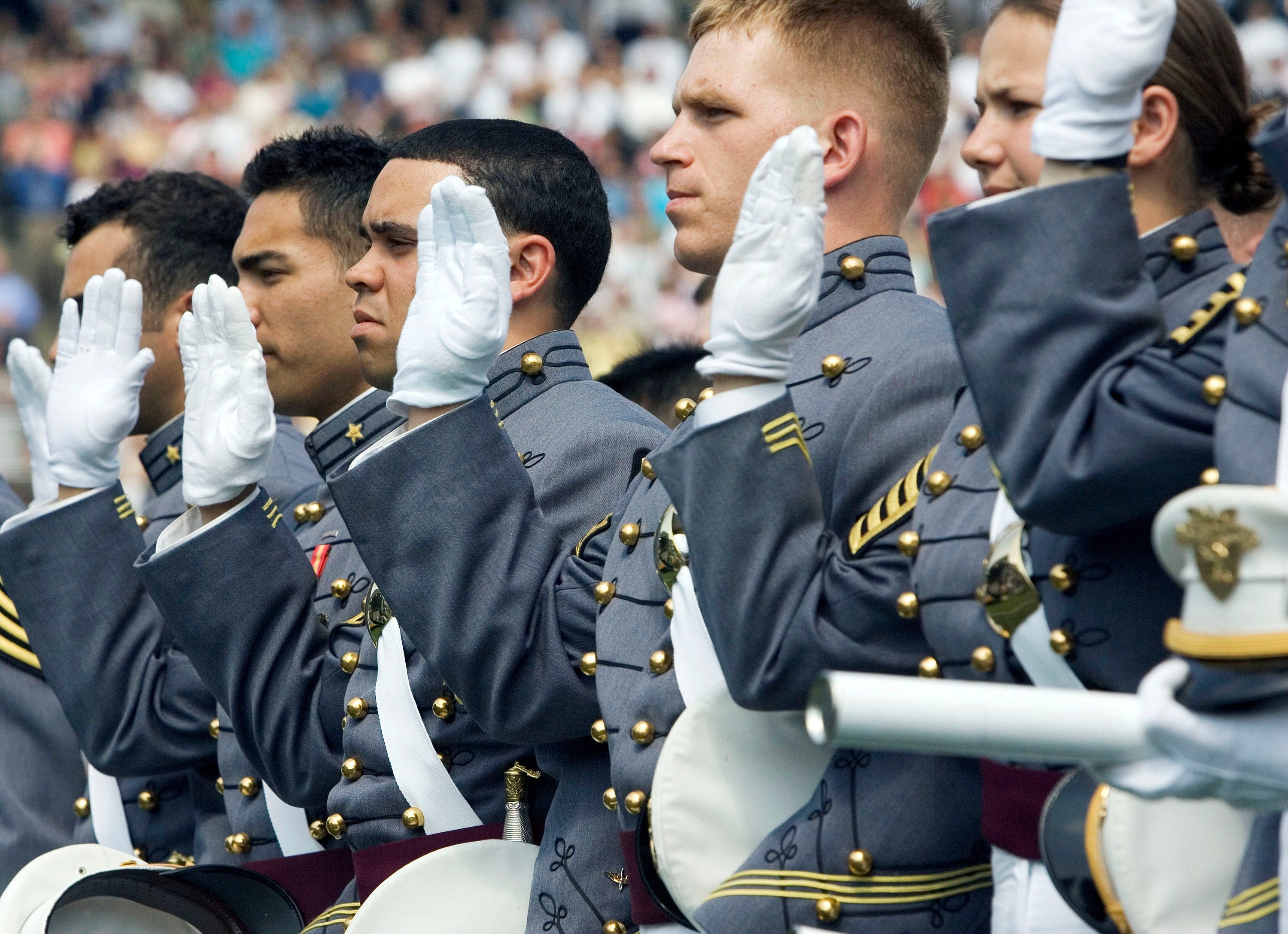
I want to address a fundamental point revealed by the video and the debate surrounding it: Most Americans do not understand what is in the oaths sworn by our service members. Confusion about that, combined with an understandable desire to keep the military a nonpartisan institution, fuels both the alarm that motivated the video’s creation and the backlash against the video. A clearer understanding on this subject will help reveal the aspects of our constitutional structure that protect the nation from unlawful uses of the military.
Here’s the truth, learned on the first day of service by every enlisted soldier, sailor, airman, Marine, guardian, and coast guardsman, and learned but sometimes not recognized by the young officers who first take the oath: There is not one military oath. There are two. And the differences between them explain exactly who is responsible for refusing illegal orders, why the system was designed that way, and what it means for this moment.
One reason the debate keeps going sideways is that the public keeps talking about “the military” as if it were a single, undifferentiated mass of people with identical obligations. It isn’t. The Constitution and Congress deliberately created two different oaths—one for enlisted personnel, and one for officers. That structure is not bureaucratic trivia; it is grounded on the bedrock American civil–military relations. Ignoring it leads to the misleading assumption that everyone in uniform bears equal responsibility when confronted with an unlawful command.
They don’t. And that distinction matters.
Enlisted members swear to support and defend the Constitution, and to “obey the orders of the President of the United States and the orders of the officers appointed over me, according to regulations and the Uniform Code of Military Justice.” And the UCMJ makes crystal clear that the service member’s obligation is to obey “lawful” orders, and that no enlisted member is permitted to carry out an unlawful order. But the enlisted oath is also intentionally anchored in obedience of the chain of command. The accountability lies one level up.
Which brings us to the officer oath—shorter in words, heavier in weight. Officers swear to “support and defend” the Constitution; to “bear true faith and allegiance” to it; and to “well and faithfully discharge the duties” of their office. They also affirm that they “take this obligation freely, without any mental reservation or purpose of evasion.” What they do not swear to do is equally important: Officers make no promise to obey the president and the officers above them.Join
That omission is not an oversight. Officers give orders, evaluate legality, and act as the constitutional circuit breakers the Founders intended. They are expected—by law, by professional ethic, and by centuries of tradition—to exercise independent judgment when presented with a questionable directive. Officers are duty-bound to refuse an unlawful order. It is not optional. It is not situational. It is their job.
When the members of Congress in their video urge what seems to be the entire military not to follow illegal orders, they may unintentionally blur the very lines that keep the system functioning. Enlisted personnel obey lawful orders; officers ensure the orders that reach them are lawful. The real constitutional failsafe is not a general broadcast to every rank. It is the officer corps, obligated by oath to the Constitution alone.
This matters in a moment when Americans are hearing loud claims about using the military to solve political disputes, intervene in elections, or take actions beyond statutory authority. People are right to worry. But they should also understand the guardrails already in place. The military has been here before—they have already, at times in our history, faced unlawful pressure, political manipulation, or attempts to turn the armed forces into a tool of personal power.
Also worth remembering: No one in the American military swears allegiance to any individual. The oaths are not pledges of loyalty to a party, a personality, or a political movement. Loyalty is pledged to the Constitution—and officers further take that obligation “without mental reservation,” knowing full well it may someday require them to stand with courage between unlawful authority and the people they serve.
So while pundits and politicians continue fighting over the optics of the lawmakers’ video, the core reality remains: The safeguards are already built into the structure. The oaths already distribute responsibility. The law already forbids what some fear. And the officer corps already knows that they bear the constitutional duty to ensure that unlawful orders never reach the young men and women who follow them, and who, in effect, they also serve.
This is not a moment for panic. It is a moment for clarity.
If Americans understood the difference between the two oaths—one grounded in obedience, the other grounded in constitutional discernment—they would see that the republic’s defenses against unlawful orders are not theoretical. They exist. They function. They don’t depend on the whims of political actors on either side of the aisle, but on the integrity of those who swear to uphold them.
The video is directed not only at military service members but also at members of the intelligence community—but in this article, I’m focusing exclusively on the former.
Lt. Gen. Mark Hertling (Ret.) (@MarkHertling) was commander of U.S. Army Europe from 2011 to 2012. He also commanded 1st Armored Division in Germany and Multinational Division-North during the surge in Iraq from 2007 to 2009.
. . .
What the military oath of enlistment says about legal and illegal orders
Military members can be prosecuted for following orders that are unlawful.
By Ivan Pereira, ABC News
November 20, 2025
A war of words between President Donald Trump and Democratic military and national security veterans on Capitol Hill has opened up a discussion about legal and illegal orders.
But the law governing the military clearly prohibits those in the service from following orders that are unlawful.
The issue came up after Democratic Sen. Elissa Slotkin, who served in the Central Intelligence Agency, in which she and five other Democratic members of Congress urged military members to not follow “illegal orders,” telling them “Don’t give up the ship.”
Trump calls Dems’ video to service members ‘seditious behavior, punishable by death’
“The threats to our Constitution aren’t just coming from abroad, but from right here at home. Our laws are clear. You can refuse illegal orders,” they say in the video. “No one has to carry out orders that violate the law or our Constitution.”
Trump and his administration condemned their message, contending the Democrats were encouraging members of the military to disobey their oath of enlistment.
“This is really bad, and Dangerous to our Country. Their words cannot be allowed to stand. SEDITIOUS BEHAVIOR FROM TRAITORS!!! LOCK THEM UP???” Trump wrote on his social media platform Thursday morning.
White House press secretary Karoline Leavitt told reporters later in her weekly media briefing, “The president expects his Cabinet officials in the administration to follow the law and to demand accountability and hold people accountable for their dangerous rhetoric.”
Federal law, however, does not permit members of the military to break the law, even if they were commanded by a superior officer, from the commander-in-chief down the chain of command.
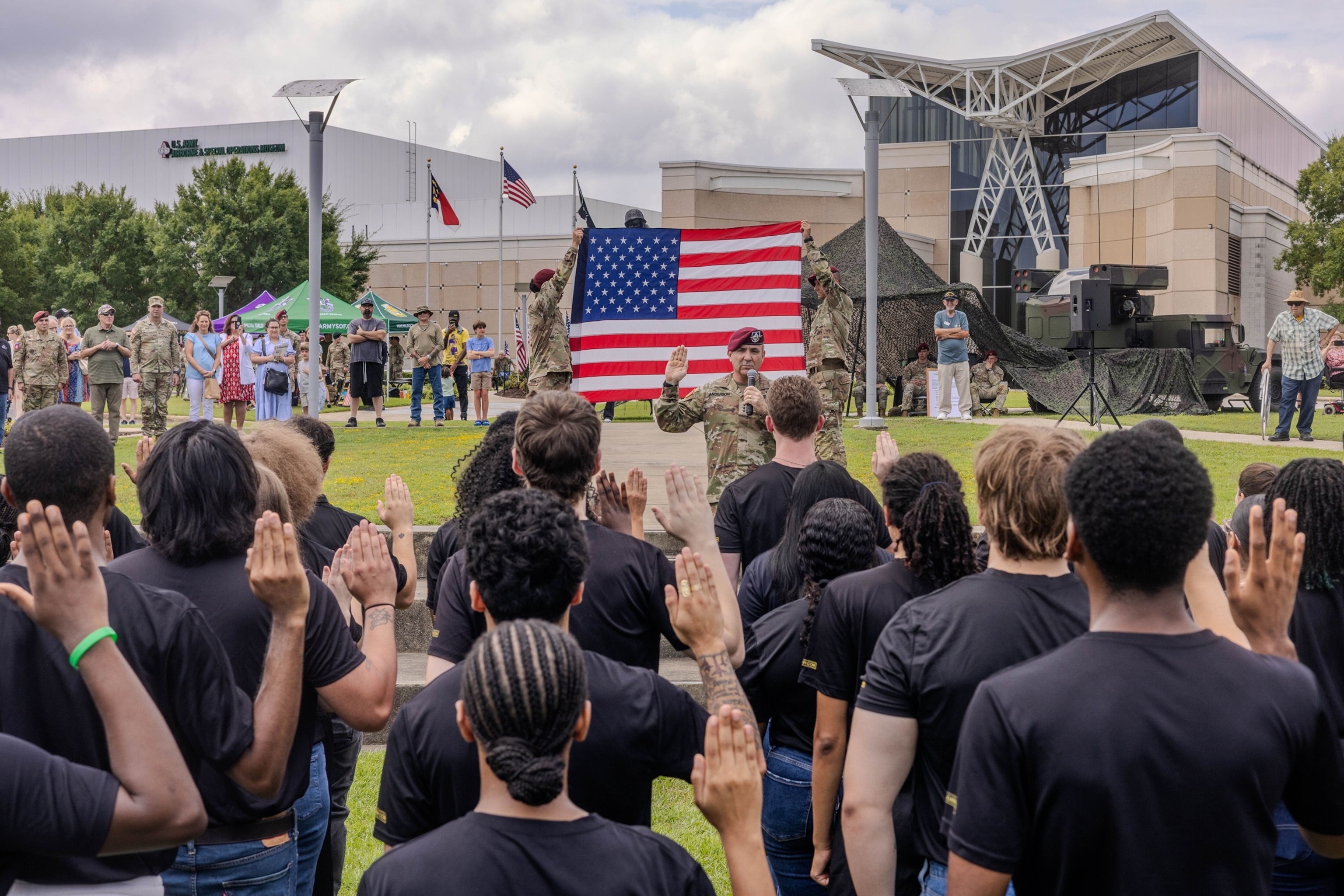
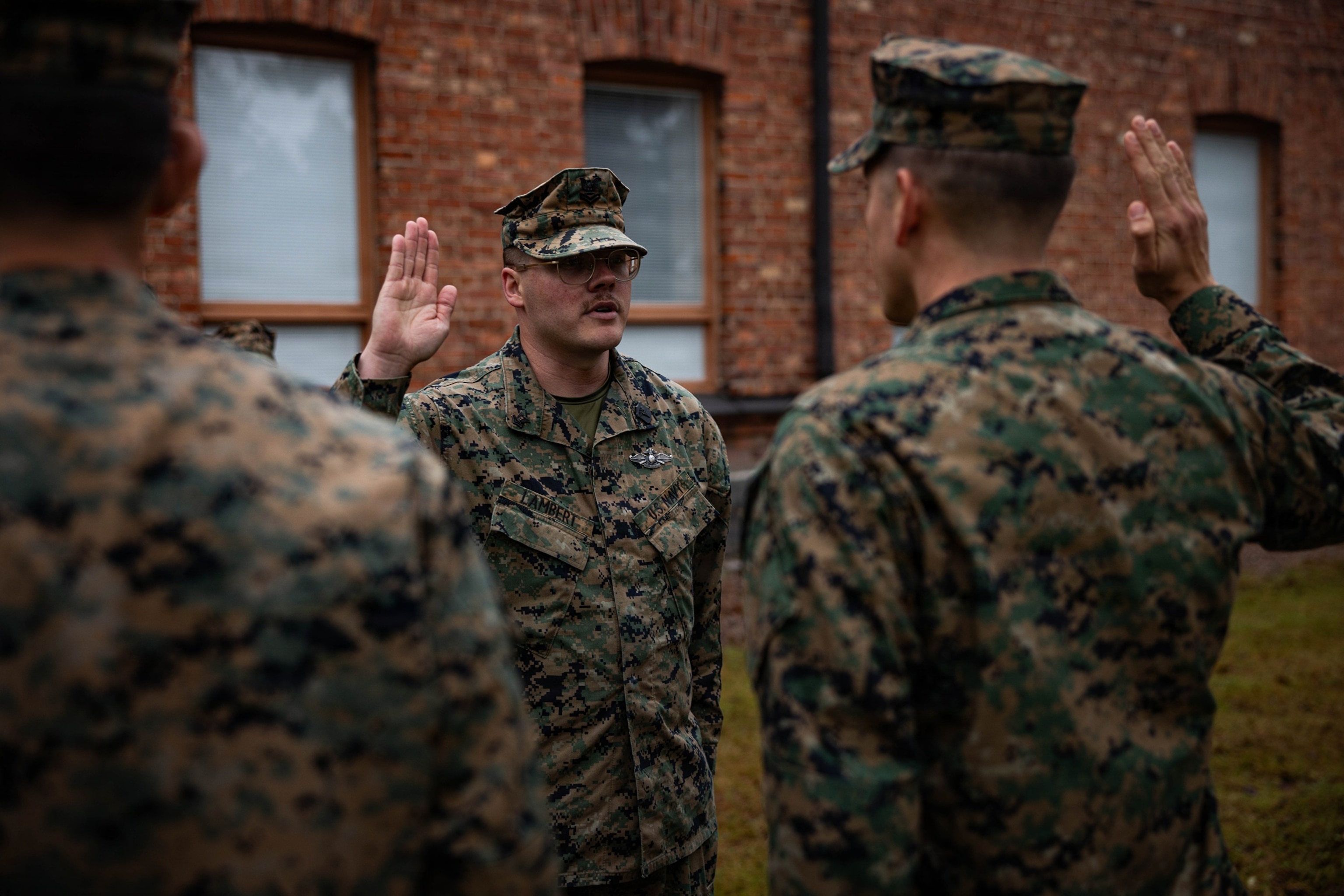
The oath of enlistment, sworn by everyone who joins the military, states they “will obey the orders of the President of the United States and the orders of the officers appointed over me, according to regulations and the Uniform Code of Military Justice.”
The UCMJ contains several provisions and articles that stipulate that service men and women are liable for a wide variety of rules and regulations, regardless of whether they were ordered by a superior officer. That includes burglary, murder, assault, rape and property destruction.
UCMJ’s Article 134 is a broad provision that prohibits “all disorders and neglects to the prejudice of good order and discipline in the armed forces, all conduct of a nature to bring discredit upon the armed forces, and crimes and offenses not capital,” and is punishable in military court.
Article 90, which covers the rules over “Willfully Disobeying Superior Commissioned Officer,” explicitly prohibits orders that “without such a valid military purpose, interfere with private rights or personal affairs.”
They are also bound to follow international agreements to which the U.S. is a signatory.
The International Committee of the Red Cross, which protects victims under the rules of the Geneva Convention, also states that armed service members are liable for criminal responsibility “if the subordinate knew that the act ordered was unlawful or should have known because of the manifestly unlawful nature of the act ordered.”
Unlawful orders have come up many times in U.S. military courts over the decades, with prosecutors pushing back against the “Nuremberg defense,” a reference to the Nuremberg trials after World War II, in which several Nazis unsuccessfully defended their actions by claiming they they were following orders from their superiors.
In 1969 during the Vietnam War, the U.S. Court of Military Appeals ruled against a soldier who was convicted of killing a Vietnamese man and claimed that he was following orders.
The court ruled that there was no justification to follow orders if “the order was of such a nature that a man of ordinary sense and understanding would know it to be illegal.”
. . .
THOMAS L. FRIEDMAN
Trump’s Neville Chamberlain Prize
Credit…Haiyun Jiang/The New York Times
Listen to this article · 7:10 min Learn more
Opinion Columnist, The New York Times
- Nov. 22, 2025
Finally, finally, President Trump just might get a peace prize that would secure his place in history. Unfortunately, though, it is not that Nobel peace prize he so covets. It is the “Neville Chamberlain Peace Prize” — awarded by history to the leader of the country that most flagrantly sells out its allies and its values to an aggressive dictator.
This prize richly deserves to be shared by Trump’s many “secretaries of state” — Steve Witkoff, Marco Rubio and Dan Driscoll — who together negotiated the surrender of Ukraine to Vladimir Putin’s demands without consulting Ukraine or our European allies in advance — and then told Ukraine it had to accept the plan by Thanksgiving.
That is this coming Thursday.
If Ukraine is, indeed, forced to surrender to the specific terms of this “deal” by then, Thanksgiving will no longer be an American holiday. It will become a Russian holiday. It will become a day of thanks that victory in Putin’s savage and misbegotten war against Ukraine’s people, which has been an utter failure — morally, militarily, diplomatically and economically — was delivered to Russia not by the superiority of its arms or the virtue of its claims, but by an American administration.
How do you say “Thanksgiving” in Russian?
To all the gentlemen who delivered this turkey to Moscow, I can offer only one piece of advice: Be under no illusions. Neither Fox News nor the White House spokeswoman Karoline Leavitt will be writing the history of this deal. If you force it upon Ukraine as it is, every one of your names will live in infamy alongside that of Chamberlain, who is remembered today for only one thing:
He was the British prime minister who advocated the policy of appeasement, which aimed to avoid war with Adolf Hitler’s Germany by giving in to his demands. This was concretized in the 1938 Munich Agreement, in which Chamberlain, along with others in Europe, allowed Germany to annex parts of Czechoslovakia. Chamberlain boasted it would secure “peace for our time.” A year later, Poland was invaded, starting World War II and leading to Chamberlain’s resignation — and his everlasting shame.
This Trump plan, if implemented, will do the modern equivalent. By rewarding Putin’s unprovoked invasion of Ukraine based on his obsession with making it part of Mother Russia, the U.S. will be putting the whole European Union under Putin’s thumb. Trump’s message to our allies will be clear: Don’t provoke Putin, because as long as I am commander in chief, the United States will pay no price and we will bear no burden in the defense of your freedom.
Which is why, if this plan is forced on Ukraine as is, we will need to add a new verb to the diplomatic lexicon: “Trumped” — to be sold out by an American president, for reasons none of his citizens understand (but surely there are reasons). And history will never forget the men who did it — Donald Trump, Steve Witkoff, Marco Rubio, Dan Driscoll — for their shame will be everlasting.
As a Wall Street Journal editorial on Friday put it: “Mr. Trump may figure he can finally wash his hands of Ukraine if Europe and Ukraine reject his offer. He’s clearly sick of dealing with the war. But appeasing Mr. Putin would haunt the rest of his presidency. If Mr. Trump thinks American voters hate war, wait until he learns how much they hate dishonor. … A bad deal in Ukraine would broadcast to U.S. enemies that they can seize what they want with force or nuclear blackmail or by pressing on until America loses interest.”
Mind you, I am not at all against a negotiated solution. Indeed, from the beginning of this war I have made the point that it will end only with a “dirty deal.” But it cannot be a filthy deal, and the Trump plan is what history will call a filthy deal.
Even before you get to the key details, think of how absurd it is for Trump to strike a deal with Putin and not even include Ukraine and our European allies in the negotiations until they were virtually done. Trump then declared it must be accepted by Thursday, as if Ukraine’s president, Volodymyr Zelensky, who has a parliament that he needs to win acceptance from, could possibly do so by then, even if he wanted to.
As my Times colleague David Sanger observed in his analysis of the plan’s content: “Many of the 28 points in the proposed Russia-Ukraine peace plan offered by the White House read like they had been drafted in the Kremlin. They reflect almost all Mr. Putin’s maximalist demands.”
Ukraine would have to formally give Russia all the territory it has declared for itself in eastern Ukraine’s Donetsk and Luhansk regions. The United States would recognize that as Russian territory. No NATO forces could be based inside Ukraine to ensure that Russia could never invade again. The Ukrainian military would be capped at 600,000 troops, a 25 percent cut from current levels, and it would be barred from possessing long-range weapons that could reach Russia. Kyiv would receive vague security guarantees from the U.S. against a Russian re-invasion (but who in Ukraine, or Moscow, would trust them coming from Trump?).
Under the Trump plan, $100 billion in frozen Russian assets would be put toward U.S.-led efforts to rebuild and invest in Ukraine, and the U.S. would then receive 50 percent of the profits from that investment. (Yes, we are demanding half of the profits generated by a fund to rebuild a ravaged nation.)
Trump, facing blowback from allies, Congress and Ukraine, said Saturday that this was not his “final offer” but added, if Zelensky refuses to accept the terms, “then he can continue to fight his little heart out.” As always with Trump, he is all over the place — and as always, ready to stick it to Zelensky, the guy fighting for his country’s freedom, and never to Putin, the guy trying to take Ukraine’s freedom away.
What would an acceptable dirty deal look like?
It would freeze the forces in place, but never formally cede any seized Ukrainian territory. It would insist that European security forces, backed by U.S. logistics, be stationed along the cease-fire line as a symbolic tripwire against any Russian re-invasion. It would require Russia to pay a significant amount of money to cover all the carnage it has inflicted on Ukraine — and keep Moscow isolated and under sanctions until it does — and include a commitment by the European Union to admit Ukraine as a member as soon as it is ready, without Russian interference.
This last point is vital. It is so the Russian people would have to forever look at their Ukrainian Slavic brothers and sisters in the thriving European Union, while they are stuck in Putin’s kleptocracy. That contrast is Putin’s best punishment for this war and the thing that would cause him the most trouble after it is over.
This would be a dirty deal that history would praise Trump for — getting the best out of a less than perfect hand, by using U.S. leverage on both sides, as he did in Gaza.
But just using U.S. leverage on Ukraine is a filthy deal — folding our imperfect hand to a Russian leader who is playing a terrible one.
There is a term for that in poker: sucker.
Ukraine Diplomacy Reveals How Un-American Trump Is
Trump Offers a Ukraine Peace Plan the Kremlin Can Love
The Times is committed to publishing a diversity of letters to the editor. We’d like to hear what you think about this or any of our articles. Here are some tips. And here’s our email: letters@nytimes.com.
Follow the New York Times Opinion section on Facebook, Instagram, TikTok, Bluesky, WhatsApp and Threads.
Thomas L. Friedman is the foreign affairs Opinion columnist. He joined the paper in 1981 and has won three Pulitzer Prizes. He is the author of seven books, including “From Beirut to Jerusalem,” which won the National Book Award. @tomfriedman • Facebook
. . .
The Murky Plan That Ensures a Future War
Who will benefit from the White House’s 28-point proposal for Ukraine?
NOVEMBER 22, 2025, The Atlantic
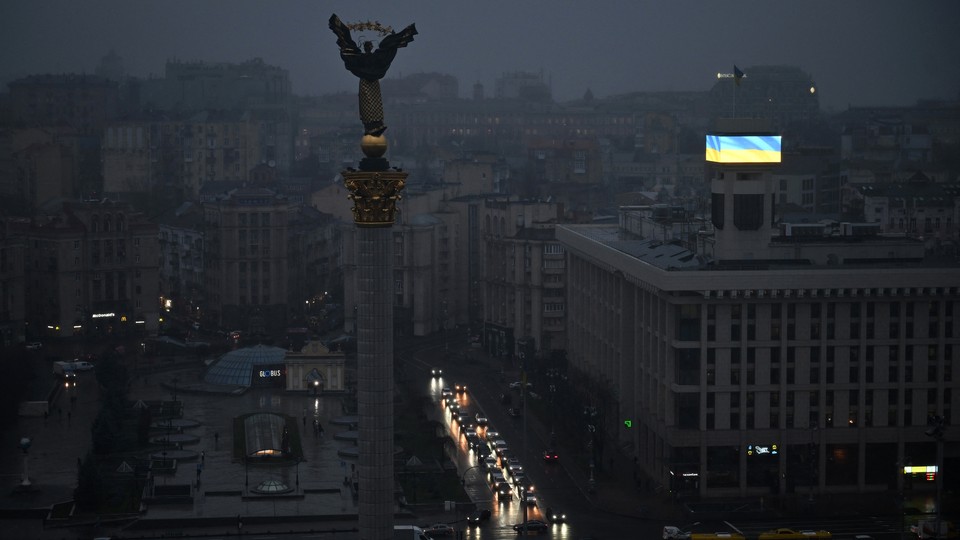
The 28-point peace plan that the United States and Russia want to impose on Ukraine and Europe is misnamed. It is not a peace plan. It is a proposal that weakens Ukraine and divides America from Europe, preparing the way for a larger war in the future. In the meantime, it benefits unnamed Russian and American investors, at the expense of everyone else.
The plan was negotiated by Steve Witkoff, a real-estate developer with no historical, geographical, or cultural knowledge of Russia or Ukraine, and Kirill Dmitriev, who heads Russia’s sovereign-wealth fund and spends most of his time making business deals. The revelation of their plan this week shocked European leaders, who are now paying almost all of the military costs of the war, as well as the Ukrainians, who were not sure whether to take this latest plan seriously until they were told to agree to it by Thanksgiving or lose all further U.S. support. Even if the plan falls apart, this arrogant and confusing ultimatum, coming only days after the State Department authorized the saleof anti-missile technology to Ukraine, will do permanent damage to America’s reputation as a reliable ally, not only in Europe but around the world.
The central points of the plan reflect long-standing Russian demands. The United States would recognize Russian rule over Crimea, Donetsk, and Luhansk—all of which are part of Ukraine. Russia would, in practice, be allowed to keep territory it has conquered in Zaporizhzhia and Kherson. In all of these occupation zones, Russian forces have carried out arrests, torture, and mass repression of Ukrainian citizens, and because Russia would not be held accountable for war crimes, they could continue to do so with impunity. Ukraine would withdraw from the part of Donetsk that it still controls—a heavily reinforced and mined territory whose loss would open up central Ukraine to a future attack.
Read: A self-defeating reversal on Ukraine
Not only would this plan cede territory, people, and assets to Russia; it also seems deliberately designed to weaken Ukraine, politically and militarily, so that Russia would find it easier to invade again a year from now, or 10 years from now. According to a version of the text that appeared in the Financial Times yesterday, the plan does state that “Ukraine’s sovereignty would be confirmed.” But it then imposes severe restrictions on Ukrainian sovereignty: Ukraine must “enshrine in its constitution” a promise to never join NATO. Ukraine must shrink the size of its armed forces to 600,000, down from 900,000. Ukraine may not host foreign troops on its soil. Ukraine must hold new elections within 100 days, a demand not made of Russia, a dictatorship that has not held free elections for more than two decades.
In return, the plan states that Ukraine “would receive security guarantees.” But it does not describe what those guarantees would be, and there is no reason to believe that President Donald Trump would ever abide by them. Russia would also “enshrine in law its policy of non-aggression towards Europe and Ukraine,” a bizarre and meaningless statement, given that Russia currently has a policy of permanent aggression not only toward Ukraine but also toward Europe and has, anyway, repeatedly violated promises before. The United States would lift sanctions on Russia, losing any existing leverage over President Vladimir Putin; invite Russia to rejoin the G8; and reintegrate Russia into the world economy. Awkward wording, evident throughout the document, suggests that at least some of it was originally written in Russian.
Why is the Trump White House pushing Ukraine to accept a Russian plan that paves the way for another war? The document offers some hints, declaring that the U.S. would also somehow take charge of the $100 billion in frozen Russian assets, for example, supposedly to invest this money in Ukraine and receive “50% of the profits from this venture.” Europeans, whose banks actually hold most of these assets, would receive nothing. European taxpayers, who currently provide almost all of the military and humanitarian support to Ukraine, are nevertheless expected to contribute $100 billion to Ukraine’s reconstruction.
Meanwhile, the United States and Russia would “enter into a long-term economic cooperation agreement for mutual development in the areas of energy, natural resources, infrastructure, artificial intelligence, data centers, rare earth metal extraction projects in the Arctic, and other mutually beneficial corporate opportunities,” according to the plan. This is no surprise: Putin has spoken of “several companies” positioning themselves to resume business ties between his country and the United States.
In March, the Financial Times reported on one of these negotiations. Mattias Warnig—a German businessman and former Russian spy who has close links to Putin and is under U.S. sanctions—has been seeking a back channel to the Trump administration through U.S. investors who want to reopen the Nord Stream 2 natural-gas pipeline, part of which was blown up by Ukrainian saboteurs early in the war. One American familiar with the plan told the Financial Times that the U.S. investors were essentially being offered “money for nothing,” which is, obviously, an attractive prospect.
Phillips Payson O’Brien: Trump’s devastating plan for Ukraine
Other details of the business negotiations carried out by Witkoff and Dmitriev remain secret. Ukrainians and Europeans, who would pay the military and economic price for this plan, deserve to know them. Above all, American citizens should be asking for the details of any business negotiations now under way. This plan has been proposed, in our name, as a part of U.S. foreign policy. But it would not serve our economic or security interests. So whose interests would it serve? Which U.S. companies and which oligarchs would benefit? Are Trump’s family members and political supporters among them? The arrangements on offer should be public knowledge before any kind of deal is signed.
For a decade, Russia has been seeking to divide Europe and America, to undermine NATO and weaken the transatlantic alliance. This peace plan, if accepted, will achieve that goal. There is a long tradition of great powers in Europe making deals over the heads of smaller countries, leading to terrible suffering. The Molotov-Ribbentrop Pact, with its secret protocols, brought us World War II. The Yalta agreement gave us the Cold War. The Witkoff-Dmitriev pact, if it holds, will fit right into that tradition.
ABOUT THE AUTHOR
Anne Applebaum is a staff writer at The Atlantic.
Explore More Topics
Donald Trump, Europe, Russia, Ukraine, Vladimir Putin
. . .
Nuremberg trial records made available online after painstaking 25-year project
Launch of digitisation project marks 80th anniversary of start of legal effort to bring Nazi leaders to justice
Kate Connolly in BerlinThu 20 Nov 2025 10.35 ESTShare
A fully digitised collection of the records of the Nuremberg trials is being launched online to mark the 80th anniversary of the start of the groundbreaking legal effort to bring Nazi leaders to justice.
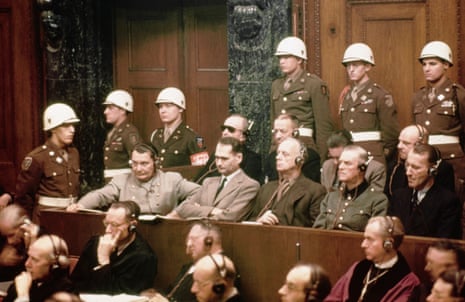
View image in fullscreenThe defendants at the Nuremberg trials. In the front row are Hermann Goering, Rudolf Hess, Joachim Von Ribbentrop, Wilhelm Keitel and Ernst Kaltenbrunner. Photograph:
Open access to every official document from the trial, held by the Harvard law school library, will be available to all researchers, whether amateur or professional, for the first time from Thursday after a 25-year endeavour by a 30-strong team of historians, metadata curators and librarians.
It began in 1998 with the removal of staples and paperclips from the delicate documents so they could be scanned. Paul Deschner, who led Harvard’s Nuremberg trials project, said that from the start the aim had been to digitise everything held on the court proceedings in the library’s collection, which had until then been kept in boxes and rarely seen. The goal was twofold: “to preserve these documents, which were starting to literally disintegrate as soon as they were touched, because they were … on 1940s-era acid-based mimeographed paper, and simply couldn’t withstand being handled, and to make them accessible in the dawn of the internet era”.
The library’s collection contains more than 750,000 pages of transcripts, briefs and evidence exhibits from across the total of 13 cases, which between 1945 and 1949 were brought against Nazi military and political leaders held responsible for atrocities against humanity, in particular the Holocaust, and revolutionised international human rights law. In the first and main proceedings, 19 of the most influential Nazis including Hermann Göring, Rudolf Hess and Albert Speer were tried. In 12 subsequent trials, almost 200 were put on trial. In all, only three were found not guilty. Twelve received death sentences and others life sentences or shorter.

Included in the trove are transcripts detailing verbatim the full activity of the courtroom over the entire course of every trial as well as source documents drawn on by lawyers, and items of evidence submitted by both prosecution and defence teams.
Deschner said ordinary users would now be able to discover in a variety of ways, such as using the transcript as a roadmap into the collection, or by keyword, a far wider range of information than previously available. The documents – in some the horror is explicit, while in others it is conveyed more euphemistically in bureaucratese – provide a detailed account of how the Nazis first hatched their plans for the Holocaust and then developed them. They “give a clear picture of how comparatively innocuous things might have looked in the early 30s compared to just a few years later”, Deschner said.
“It has enormous utility for people who have eyes to see, ears to hear … in the context of every period of time, including our own, it could make people aware to be on the lookout for the dynamics as they are portrayed in these archives.”
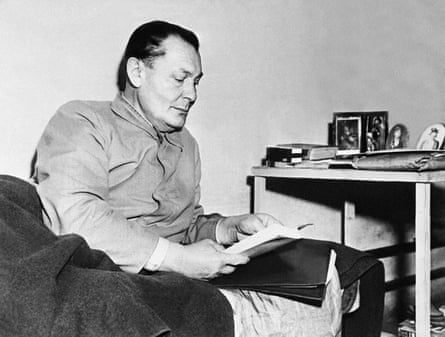
In the first and main proceedings, 19 of the most influential Nazis including Hermann Göring (pictured in about December 1945) were tried.
Inquiries so far have come from everyone from historians and film producers to people searching for information on relatives who had participated in the trial, whether as witnesses, as part of the legal teams or as a defendant.
At a time when academic freedom is generally perceived to be under threat and, in the US in particular, universities are being challenged over their traditional role as places for fostering truth, the project had taken on even more significance, Deschner said.
“Of course if you’re a dyed-in-the-wool Holocaust denier, the sky’s the limit in terms of what you can come up with to argue that it didn’t happen. As people’s access to the world is so much influenced by what’s digitally accessible, and as we’re seeing the undermining of whatever might have previously passed as authentic, it’s absolutely essential that we are offering the user buttressing evidence that proves the authenticity of what they’re looking at.”
He cited the extensive documentary trail behind each trial exhibit. “There’s a government document, of which a photostat is made, which is transcribed into German, of which a typescript version is made, which is translated into English, of which there is a one-page summary.”
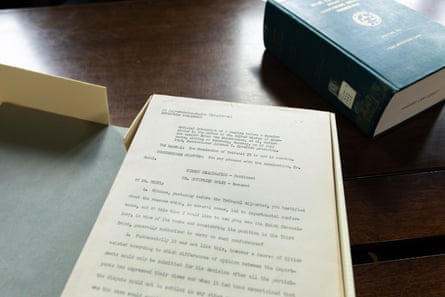
As for the court activity, the linguistic side offered an entirely under-researched field of its own, Deschner said. “You had the first extensive introduction of simultaneous translators, to cope with the four languages being used, then the stenographer taking down the verbatim verbiage from the translator that she’s hearing in her headset, and then someone typing it up. There were multiple layers of interpretation going on and I think very little research has been done on that.”
Amanda Watson, of Harvard law school’s library and information services, said the robust preservation of the documents as digital surrogates was not enough on its own: the knowledge had to be shared. “This collection stands as an answer to one of history’s more critical questions,” she said in a statement. “How can law rise to meet moments of international crisis? Today we ensure that answer is not locked away but available to all. When we make justice visible, we make it possible.”
Explore more on these topics
Recent Posts
- Armenia’s pro-Europe party wins election and cements shift away from Russia
- “The Interview: Scott Pelley on the Bari Weiss Era and His Last Days at ‘60 Minutes’”, The New York Times
- “Child’s Play”, Harper’s Magazine
- “How social media platforms keep students hooked: Notifications during school hours and paid ‘teen ambassadors’”, El Pais
- “With Ukraine Stronger on the Battlefield, Zelensky Offers to Meet Putin”, The Wall Street Journal
Archives
- June 2026
- May 2026
- April 2026
- March 2026
- February 2026
- January 2026
- December 2025
- November 2025
- October 2025
- September 2025
- August 2025
- July 2025
- June 2025
- May 2025
- April 2025
- March 2025
- February 2025
- January 2025
- December 2024
- November 2024
- October 2024
- September 2024
- August 2024
- July 2024
- June 2024
- May 2024
- April 2024
- March 2024
- February 2024
- January 2024
- December 2023
- November 2023
- October 2023
- September 2023
- August 2023
- July 2023
- June 2023
- May 2023
- April 2023
- March 2023
- February 2023
- January 2023
- December 2022
- November 2022
- October 2022
- September 2022
- August 2022
- July 2022
- June 2022
- May 2022
- April 2022
- March 2022
- February 2022
- January 2022
- December 2021
- November 2021
- October 2021
- September 2021
- August 2021
- July 2021
- June 2021
- May 2021
- April 2021
- March 2021
- February 2021
- January 2021
- December 2020
- November 2020
- October 2020
- September 2020
- August 2020
- July 2020
- June 2020
- May 2020
- April 2020
- March 2020
- February 2020
- January 2020
- December 2019
- November 2019
- October 2019
- September 2019
- August 2019
- July 2019
- June 2019
- May 2019
- April 2019
- March 2019
- February 2019
- January 2019
- December 2018
- November 2018
- October 2018
- September 2018
- August 2018
- July 2018
- June 2018
- May 2018
- April 2018
- March 2018
- February 2018
- January 2018
- December 2017
- November 2017
- October 2017
- September 2017
- August 2017
- July 2017
- June 2017
- May 2017
- April 2017