“COP30 saves face but not the climate”, Le Monde
Editorial
Le Monde
Although delegations from 194 countries did reach an agreement in Brazil, there was no decisive breakthrough to accelerate the implementation of the commitments made under the Paris Agreement, adopted exactly 10 years ago.
Published November 23, 2025 at 12:35 pm (Paris) 2 min read Lire en français
Staying the course, even at the expense of slowness, lack of ambition and concessions. The outcome of COP30 in Belem, Brazil, which concluded on Saturday, November 22, could be summed up as a disappointing yet slightly reassuring balance, oscillating between major letdown and minor relief. Delegations from 194 countries did reach an agreement, but it fell short of expectations and the urgent needs of the climate crisis.
In a multipolar world marked by rising geopolitical and trade tensions, with the United States, the world’s leading power, disputing climate change, and deep-rooted mistrust between the Global North and South, there was no crucial push to speed up implementation of the Paris Agreement commitments, adopted a decade ago.
The glass could be viewed as half-full, given that the position taken by Donald Trump’s United States has not created a dynamic that calls into question the reality of climate change and the need for action. The 194 countries “strongly reaffirmed” their commitment to multilateralism and to the Paris Agreement, meaning the worst was avoided. Some progress was also made, such as increased financial efforts for adaptation. But the nations most vulnerable to heatwaves or floods must be content with targets that could be interpreted any way they liked.
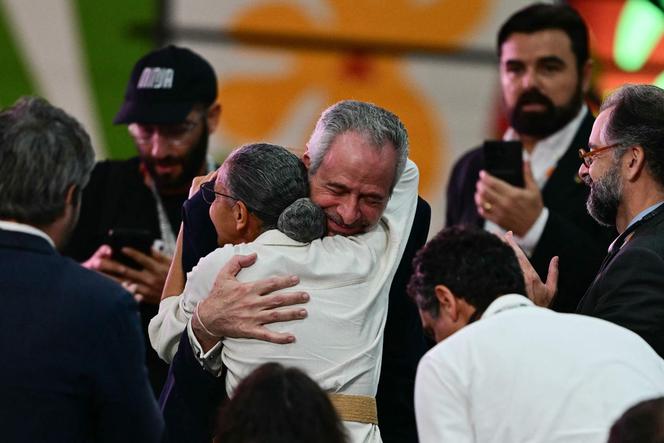
The disappointment of COP30 could be measured mainly by its deadlocks. In the bargaining game of negotiations, major emerging countries – led by India and Saudi Arabia – maneuvered to spare fossil fuels, the main source of greenhouse gas emissions. The European Union ultimately found itself isolated, alongside Latin American countries, in advocating for an end to coal, oil and gas.
Read more Subscribers only COP30’s unambitious agreement preserves multilateralism but overlooks climate emergency
The 27 EU member states could probably have overcome the indecision of African countries and small island states by agreeing to accelerate funding for the climate transition, with Europeans already being the leading contributors. But the EU shut the door on any new financial demands from the Global South from the outset, a stance that alienated those countries and soured other negotiations. The EU insisted it would not foot the bill alone after the US pulled out, especially in a time of budget austerity and populist backlash against the transition.
Instead of playing the role of the model student on the defensive, the EU would be better off building new alliances with Africa, Latin American countries and small islands to regain its leadership on climate issues. This is a long-term project, but one that is essential to launching a new momentum.
The negotiation process itself also needs to be rethought. The COPs are the only forums that keep climate at the top of the agenda and where every country can make its voice heard. The downside, however, is that each nation defends its own priorities and development model. The purpose of the COPs has shifted from negotiating agreements to implementing commitments. That means that beyond alliances, countries should aim to inspire others by being ambitious at home.
After all, the COPs are only an echo chamber for countries’ political will and cannot go further than national decisions allow. But all must bear in mind that when it comes to climate change, standing still is already a step backward. From this point of view, Belem was a missed opportunity.
Interview Subscribers only Laurence Tubiana: ‘The issue of fossil fuels now comes up at every COP’
Le Monde
Translation of an original article published in French on lemonde.fr; the publisher may only be liable for the French version.