“World Food Day: Is Ukraine still feeding the world?”, Deutche Welle
October 15, 2025, Bonn
Grain harvests in the “world’s breadbasket” have dropped by a quarter since Russia’s invasion. But more than three years on, Ukraine’s role in global food security endures despite disrupted ports and captured farmland.
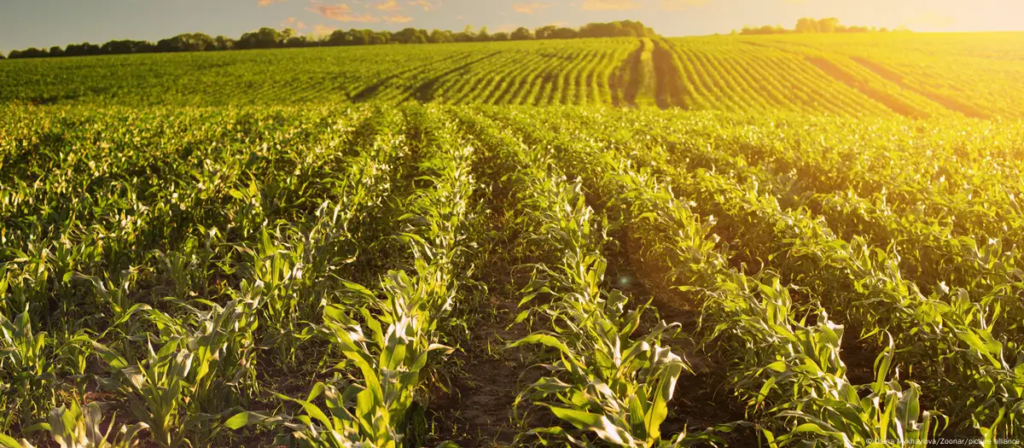
Ukraine is still one of the world’s top five exporters of wheat and cornImage: Olena Mykhaylova/Zoon
Fertile soils, vast arable land and a history of feeding empires and global markets helped Ukrainebecome known as the “world’s breadbasket.”
With 41.3 million hectares (102 million acres) of farmland, two-thirds of which is covered by so-called black soil — the world’s richest soil — the country yields high crop productivity with minimal inputs from fertilizers, irrigation, labor and heavy machinery.
Ukraine’s grain surplus fed the Russian Empire and later the Soviet Union. After independence in 1991, the country became a major food supplier to the world, particularly the Middle East, North Africa and Asia.
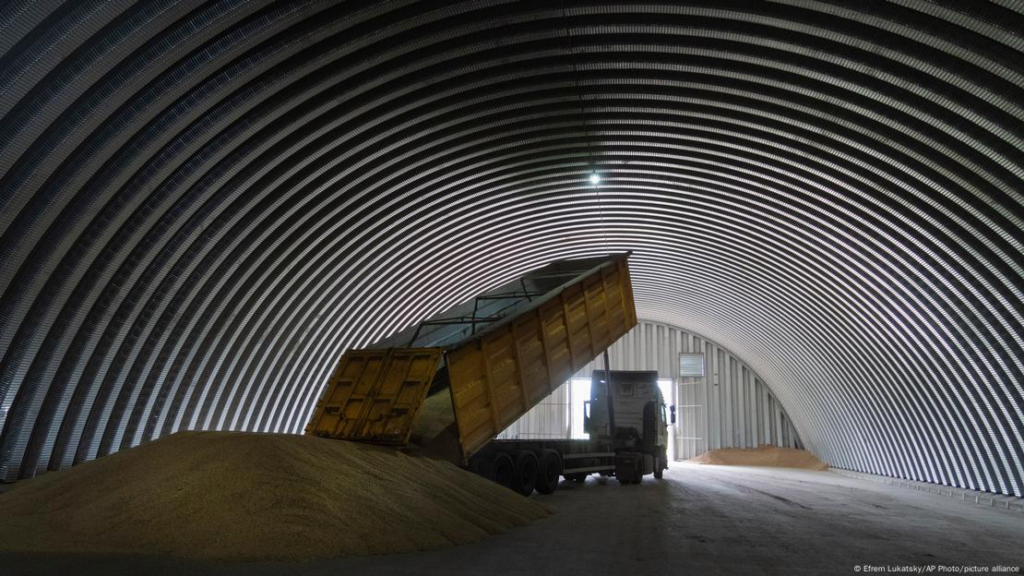
The UN and Turkey helped Ukraine unblock grain exports to Africa and the Middle EastImage: Efrem Lukatsky/AP Photo/picture alliance
From abundance to endurance
Before Russia launched its full-scale invasion of Ukraine in February 2022, agriculture made up 41% or $27.8 billion (€23.98 billion) of Ukraine’s export revenue in 2021, according to data from the US Department of Agriculture (USDA). The war has been devastating both for the domestic economy and for global food security.
Moscow’s forces seized large swaths of arable land, while a Russian naval blockade, missile strikes and mined waters halted nearly all shipments through Ukraine’s primary export route, the Black Sea.
Export volumes nosedived by over 90% in the first three months of 2022, compared with the previous year, triggering global food price spikes and deepening hunger crises in import-dependent countries.
Natalia Shpygotska, senior analyst at Kyiv-based investment house Dragon Capital, noted that before the invasion, Ukraine accounted for around 8% of global wheat exports, 13% of corn and 12% of barley exports. It also supplied 40-50% of the world’s sunflower oil.
“Lower crop supplies and uncertainty over commercial navigation prospects in the Black Sea caused international crop prices to soar to $400 [€345] per ton, which dented the affordability of basic food staples all over the world,” Shpygotska told DW.
The invasion led to a 29% drop in grain production for 2022/23, with 22% of arable land unsown due to Russian occupation, land mines and labor shortages. Looking back, however, exports quickly recovered, USDA data shows.
Food a front line in Russia’s war
Ukraine accused the Kremlin of weaponizing food security through the deliberate targeting of agricultural infrastructure. In the first two years of the conflict, more than 300 farm facilities were damaged by Russian attacks, and in 2022 alone more than 500,000 tons of grain were stolen.
It took until August 2022 for Ukraine’s armed forces to significantly push back Russia’s Black Sea fleet, using naval drones and Western anti-ship missiles, with the sinking of the Moskva in April a key blow to the Kremlin. Global crop prices stabilized near pre-war levels a year later.
The Black Sea Grain Initiative, launched in July 2022 by the United Nations and Turkey, reopened three Ukrainian ports, enabling 33 million tons of grain exports by July 2023.
The European Union’s so-called Solidarity Lanes, which used rail, river (Danube) and road routes through Poland, Romania and Bulgaria, allowed nearly half of Ukraine’s grain exports to reach Europe, despite Russia’s blockade.
Together, these efforts restored Ukraine’s exports to around 64 million tons in 2023/24, recovering 75% of pre-war levels and stabilizing global food security.
“EU Solidarity Lanes provided an important lifeline, before navigation via Black Sea ports was fully restored,” said Shpygotska. “However, due to infrastructural constraints and substantially higher transport costs, overland routes were not able to fully substitute seaborne exports.”
Trade flows return, stability still elusive
More than three years into Russia’s invasion, Ukraine’s Ministry of Agrarian Policy and Food projected over 60 million metric tonnes (66 million US tons) of grain and oilseed exports for the July 2024–June 2025 season, including 15 million tonnes of wheat, 25 million tonnes of corn and 2.5 million tonnes of barley.
Last month, however, Ukraine recorded a 38% drop in agricultural exports, compared with the same month in 2024, partly as a result of Russia’s intensified strikes on Black Sea ports. Transfers through Ukraine’s Odesa port were down by nearly a third, according to the Ukrainian Grain Association.
The entire 2025/26 season forecast is also less optimistic, with Ukraine’s grain harvests projected to drop by 10% to around 51 million tons due to ongoing war disruptions, signaling persistent vulnerabilities.
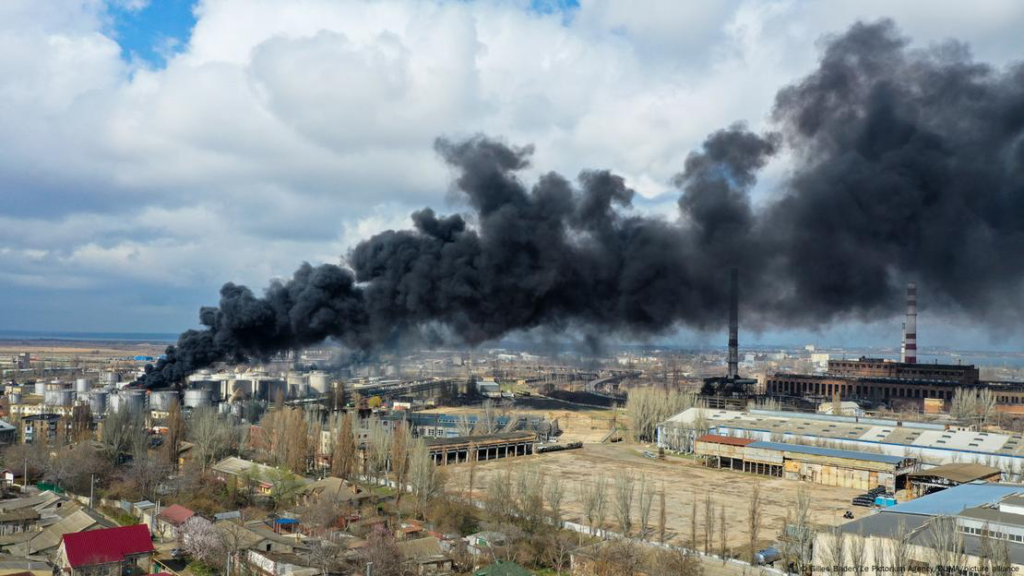
Russia has recently increased its attacks on Ukraine’s Black Sea ports Image: Gilles Bader/Le Pictorium Agency/ZUMA/picture alliance
As the world marks World Food Day on October 16 — a United Nations initiative to combat global hunger — Ukraine’s contribution remains critical. The country’s grains are a lifeline for food-insecure regions, filling gaps no one else can match at scale.
The World Food Program, for example, sourced 80% of its grain from Ukraine in 2023 to help feed some 152 million people in war-torn Yemen and Ethiopia, among other countries.
Ukraine grapples with several pressures
Aside from the war, which has cost Ukraine more than $80 billion in losses, several hurdles remain. Around 20% of Ukraine’s population, some 7.3 million people, remain food insecure.
A projected $55.5 billion cost to rebuild Ukraine’s agricultural infrastructure as part of wider reconstruction efforts is massively underfunded. Land prices, particularly agricultural land, have risen sharply over the past two years.
EU import caps on some Ukrainian agricultural products, which began in 2024, have raised tensions between Kyiv and EU neighbors Poland, Slovakia and Hungary, who complained about market oversupply and competition with local farmers.
Farmers put lives at risk
The ongoing danger to agricultural workers remains real. The Wall Street Journal (WSJ) reported in September that more than a dozen farm workers have been killed and over 40 wounded in Ukraine’s Kherson region alone since the war began, citing government data.
Among them was farmer Oleksandr Hordienko, who had said in July that he had downed more than 80 Russian drones with tracking equipment and a rifle he bought himself. Last month, Hordienko was killed in a Russian drone attack on his vehicle, the WSJ said.
“Ukrainian farmers face land mines, destroyed irrigation systems and frequent drone and missile strikes near front lines,” said Shpygotska. “Yet, they ensure domestic food security and supply grains, oils and proteins to global markets, defying extraordinary odds.”
Climate change also poses a significant threat. Rising temperatures and recurrent droughts are projected to threaten Ukraine’s grain yields moving forward. And with so much of Ukrainian farmland still in Russian hands, Shpygotska warned that it could remain out of operation for many years.
“Sustainable peace and demining efforts would be necessary to return this farmland to cultivation,” she said.
While Ukraine’s breadbasket label endures despite the many challenges, only global support in finding a workable peace deal and boosting trade can secure its harvests and feed millions worldwide.
Edited by: Uwe Hessler