“Under-16s to be banned from TikTok, YouTube and other social media by next spring, Starmer says”, BBC News
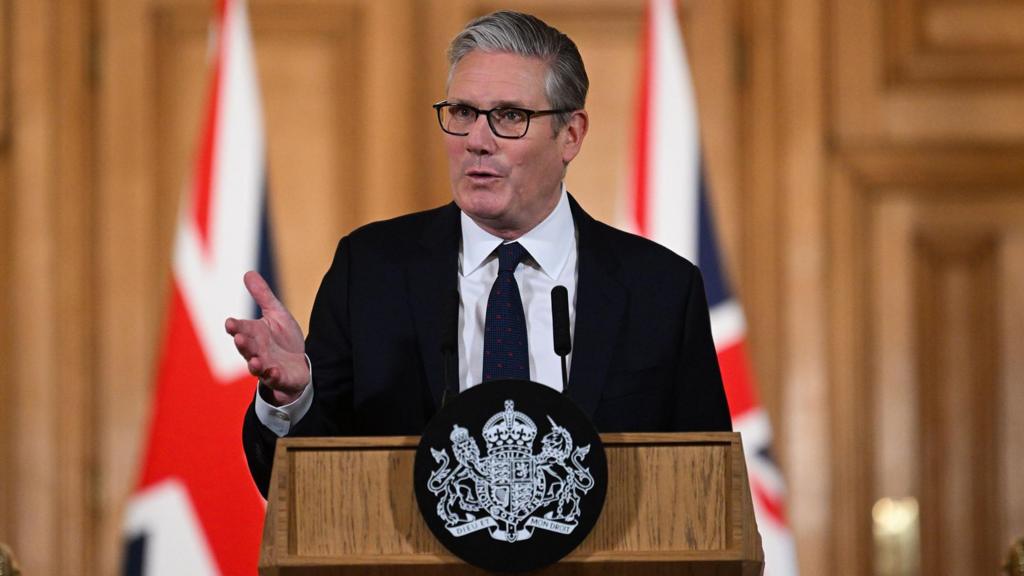
Prime Minister Keir Starmer at press conference on protecting children from social media
London, 15 June 2026
Summary
- Keir Starmer says under-16s will be banned from social media by spring 2027 – key points from the announcement
- Snapchat, TikTok, YouTube, Instagram, Facebook and X are among the platforms affected – but not WhatsApp or Signal, the government says
- “A full ban is the right choice… I am not prepared to compromise on the safety and happiness of our children,” Starmer says in a televised statement
- At a high school in Wythenshawe, Manchester, Year 8 and 9 pupils have their say on social media: Sean, 13, says “it’s a bad place” while Isaac, also 13, says he’s “disappointed” ministers opted for a ban instead of trying to make platforms “safer”
- Meanwhile, Louise Gibson, the mother of 11-year-old Noah who is alleged to have died after attempting an online challenge, says “this is right for children and it’s right for parents” – here’s what other bereaved families told the BBC
- In Australia, which became the first country in the world to introduce a similar ban in December, our reporter says little has changed and teenagers are bypassing age restriction systems
- Under-16 social media ban announced, as PM says he won’t compromise on child safety–Katie Williams, Live reporter. Under-16s will be banned from social media platforms as soon as spring 2027, Keir Starmer announced this morning.Platforms like Snapchat, TikTok, YouTube, Instagram, Facebook and X are in scope, while messaging services like WhatsApp are not – here’s a summary of key changes.The PM says he will not compromise on the “safety and happiness of our children”, accusing platforms of being “designed to be addictive” with features that “lock you in for hours”.Australia was the first country in the world to introduce a similar ban last December – Starmer says the government has learned from Australia and calls new UK measures “world leading”.Australian PM Anthony Albanese congratulated the PM on an “important step”. But six months on from the Australian ban, BBC reporter Tiffanie Turnbull says implementing it remains “incredibly difficult” with 70% of parents in a recent survey saying their children were still on banned platforms.YouTube, Meta and Snapchat have responded saying the ban could push young people towards “less safe” platforms. “If that’s the best they’ve got, then I think they’re in trouble,” says bereaved father Mark Dowey in response.
- Starmer’s delicate balancing act–Zoe Kleinman,Technology editor. On the one hand the prime minister must be tough on the tech giants and force them to comply with a ban on their own products. On the other, he continues to promote the UK as a great place for the tech and AI industry to grow and thrive – and spend money. The same US tech companies under the shadow of the ban have invested millions of dollars in their UK operations. Is there a tipping point at which they decide to cut back on their British commitments? And there’s another challenge ahead, in the form of US president Donald Trump, who is fiercely protective of those same firms – Keir Starmer admitted that he has not yet discussed the announcement with his fiery counterpart and will do so at the G7, his next destination.
- Children must be given more opportunities offline, says culture secretary
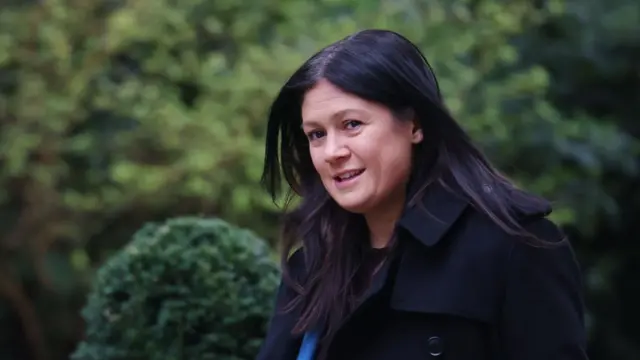 IMAGE SOURCE, EPAImage caption, Culture Secretary Lisa Nandy pictured earlier this year. Culture Secretary Lisa Nandy says keeping children safe online “must go hand in hand with giving them more opportunities offline”.Writing on X, she says the government is “investing in sport, music, culture and the arts” to give young people “the confidence and connections to thrive”. It follows similar comments from PM Keir Starmer earlier, who said the social media ban “isn’t just about taking something away”.
 - How are 8- to 14-year-olds spending time online? Ofcom data offers some insight. Children in the UK aged eight to 14 are online for an average of nearly three hours each day, at least two hours of which are spent using types of social media, survey data suggests.Media regulator Ofcom has been drilling down on the figures, external and has found that YouTube accounts for the largest share of time spent online by young people in the eight to 14 age group, at 23%.Snapchat is responsible for 18% of time online, with WhatsApp on 9%, TikTok accounting for 7%, Roblox also for 7% and other platforms accounting for 36%.The use of these services varies according to age, Ofcom found. It says it is ready to work with the government to help “”build on this progress with new measures to protect children”.In its survey, Ofcom found that the youngest age group, eight to nine-year-olds, are likely to spend an average of 53 minutes each day using YouTube (45% of time online) and 10 to 12-year-olds spend 55 minutes (31%), but among 13 to 14-year-olds the average drops to 31 minutes (13%).The opposite pattern is true for Snapchat, which accounts for six minutes of time online spent by eight to nine-year-olds (5% of the total), rising to 36 minutes for 10 to 12-year-olds (20%) and one hour and 37 minutes for 13 to 14-year-olds (40%).And use of TikTok increases gradually, from an average of six minutes a day among eight to nine-year-olds (5% of time online) to 17 minutes for 10 to 12-year-olds (9%) and 21 minutes for 13 to 14-year-olds (9%).
- Teaching unions welcome ban after ‘routinely seeing harm’–Nathan Standley, Education reporter. Support for the ban is coming in from the biggest teaching unions across the country. The general secretary for the Association of School and College Leaders, Pepe Di’Iasio says teachers “routinely see the harm caused” by social media platforms. He says Monday mornings are a time when teachers are “managing the aftermath of whatever has happened at the weekend”.The National Education Union says teachers see “every day how social media is harming children – disrupting their learning, isolating them and exposing them to content they are simply not ready for”.Similarly, the NASUWT says pupils’ “wellbeing, behaviour and ability to learn” are all impacted by some of the more harmful aspects of social media.The National Association of Head Teachers says “a much wider package of measures” will be needed to properly address the risks posed by social media and the wider online world.They’ve welcomed the government’s commitment to take action on gaming and streaming platforms too, saying a focus on social media alone “would risk letting [tech companies] off the hook”.